


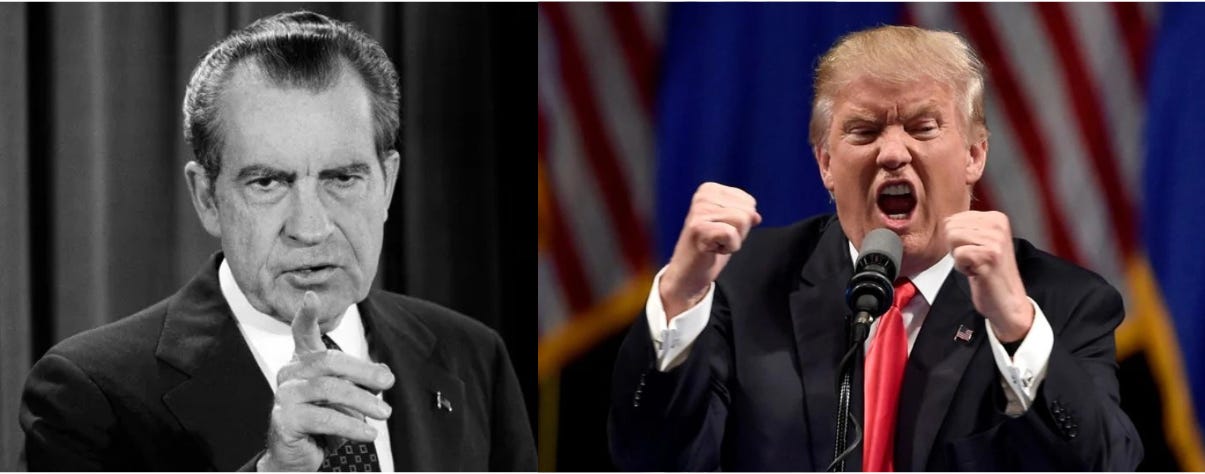
Over the past twelve months the United States has faced a cascade of high-profile controversies from the ongoing release of the Jeffrey Epstein files to a unilateral military operation in Venezuela, from disputed Pentagon footage of a “double-tap” strike to a handful of senior staff departures. Individually each story is newsworthy; together they reveal a pattern that historians liken to the “Nixon containment” phase of the early 1970s.
The evidence that underpins this assessment comes from a broad set of Tier-1 sources (AP, Reuters, PBS, BBC, Al Jazeera), official congressional records, court filings, and statements from the agencies directly involved. Below we lay out the three most consequential strands, explain the institutional dynamics at work, and clarify why the notion of a “wave of cabinet resignations” is not supported by the record.
1. Epstein Files – A Test of Congressional Oversight and Executive Compliance
The Epstein Files Transparency Act mandated that the Department of Justice (DOJ) release all investigative material related to Jeffrey Epstein and his associate Ghislaine Maxwell by December 19, 2025. The DOJ has turned in a limited batch of documents, heavily redacted, and has repeatedly cited victim-privacy and national-security concerns as reasons for withholding additional material.
Institutional response
The House Oversight Committee and the Senate Judiciary Committee have moved from informal requests to formal subpoenas and are now discussing contempt referrals.
The Southern District of New York (SDNY), which retains the original investigative files, has been explicitly stated it is prepared to produce the documents if ordered by a court.
Media coverage (AP, Reuters, PBS) has shifted from “what’s in the files?” to “who decided what to withhold and why?”
Why it matters
The controversy is no longer about the content of the files but about process compliance. When a president’s own Justice Department is accused of “bad-faith” obstruction, the credibility of the entire executive branch is called into question. The growing congressional pressure creates a concrete legal trigger that could force a court-ordered full release or a contempt judgment, both of which would dramatically curtail the administration’s ability to manage the narrative.
2. Venezuela Operation – Unilateral Force and the War-Powers Question
On January 3, 2026, the United States conducted a series of air strikes in north-west Venezuela, followed by the detention and transport of President Nicolás Maduro and First Lady Cilia Flores to New York for pending U.S. criminal charges. The White House framed the action as a necessary counter-narcotics measure; the State Department later clarified that the operation was not intended to “run the country” but to pressure the Maduro regime.
Institutional response
No formal congressional authorization or prior notification has been disclosed, raising immediate concerns under the War Powers Resolution.
International outlets (BBC, Al Jazeera, The Guardian) have labeled the move a potential violation of UN Charter Article 2(4), prompting a wave of diplomatic condemnations.
Within Congress, both Democrats and a growing cohort of Republicans have called for a War Powers Inquiry, and the Senate Armed Services Committee has scheduled a hearing on the legal basis of the operation.
Why it matters
When the executive undertakes kinetic action without clear legislative backing, the constitutional balance between Congress and the President is evaluated. The current lack of a documented congressional resolution makes the operation a high-gravity trigger for institutional push-back precisely the kind of event that, in historical precedent, has accelerated the erosion of presidential latitude.
3. Pentagon Transparency Dispute & Staff Turnover – The “Double-Tap” Fallout
In September 2025, a U.S. naval strike killed a group of suspected drug traffickers off the Venezuelan coast. A second, controversial “double-tap” strike was later alleged to have targeted surviving crew members. The Department of Defense (DoD) has repeatedly declined to release the after-action footage, citing operational security.
Institutional response
Congressional hearings have repeatedly questioned Secretary of Defense Pete Hegseth about the decision not to disclose the video.
Several senior DoD officials have been reported as preparing written statements that distance themselves from the decision-making chain.
The Office of the Inspector General has opened a preliminary review of the incident, signaling an internal audit that could lead to formal findings.
Why it matters
The refusal to provide evidence fuels a broader perception that the administration is obstructing oversight. When senior officials become “isolated fall-persons” the individuals most likely to be asked to testify or resign the entire department’s ability to act decisively is compromised. This mirrors the “process-crisis” phase of the Nixon era, where the focus shifted from the underlying act to the administration’s handling of evidence.
4. Staff Departures – No Coordinated Cabinet Exodus
Recent reporting has highlighted a few high-profiles exits:
While these departures signal personal risk-management, there is no wave of cabinet-level resignations. No multiple secretaries have tendered their exits within a short window, and no group of senior officials has issued a joint statement indicating an inability to continue serving. The pattern is one of isolated, individual exits rather than a coordinated exodus.
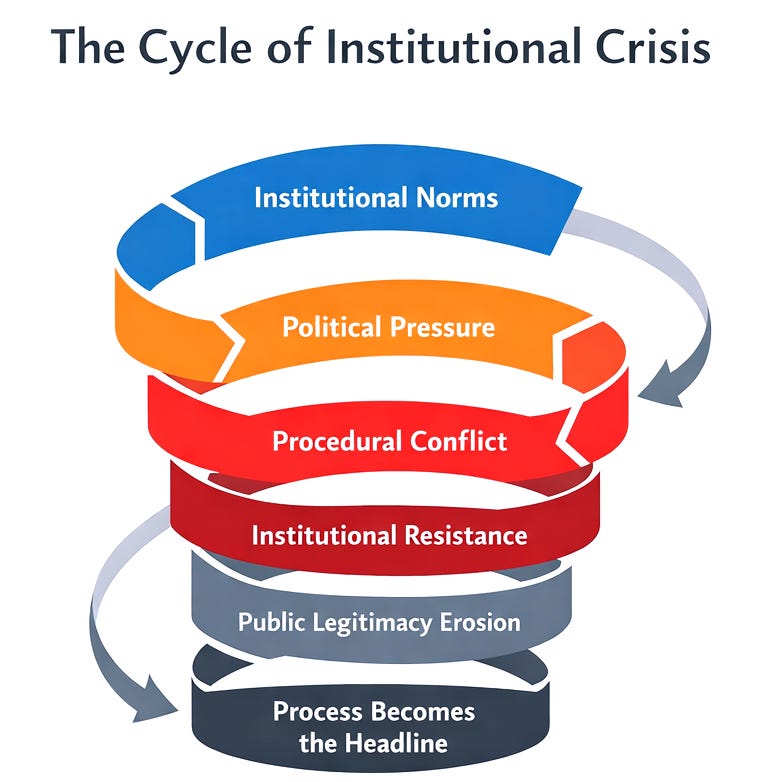
Putting the Pieces Together: A Contemporary “Nixon-Style” Containment
Historians of the Watergate era note three pivotal moments:
A scandal that moved from substantive wrongdoing to procedural obstruction.
A legal trigger that forced the executive to confront congressional authority.
A senior-party break-away that signaled the loss of elite protection.
All three are observable today:
Procedural obstruction – the DOJ’s partial Epstein releases and the DoD’s refusal to share strike footage.
Legal trigger – the War Powers question surrounding the Venezuela operation and the looming contempt action over the Epstein files.
Party fracture – a growing number of Republican senators and representatives publicly hedging, plus recent individual resignations that show personal risk mitigation.
The difference from 1973 is the speed of the news cycle and the multiplicity of media platforms, which compresses the timeline. Nevertheless, the structural dynamics are the same: institutions begin to act independently of the president, limiting his ability to set the agenda and forcing him into a “constrained presidency” where rhetoric outpaces actual policy implementation.
What This Means for Democratic Governance
Institutional resilience is being evaluated. Courts, congressional committees, and career civil-service officials are asserting their statutory roles more forcefully than in recent administrations.
Executive discretion is narrowing. The president retains formal authority, but the practical leeway to act unilaterally—particularly in foreign policy and law-enforcement matters—is shrinking.
Public trust hinges on process, not personality. Polls show approval in the low-40 % range; credibility gaps in procedural matters (e.g., document compliance) are eroding the remaining goodwill among independents and moderate Republicans.
These trends do not predict an immediate collapse of the administration, but they signal a shift from a “dominant-president” model to a “constrained-president” model. In that environment, future policy initiatives will be filtered through heightened oversight, and any further unilateral actions will encounter stronger legal and diplomatic resistance.
Looking Ahead
Watch the congressional timetable for a formal War Powers hearing on the Venezuela operation. A vote to compel the administration to produce a detailed justification would be a decisive legal trigger.
Monitor the DOJ-SDNY interaction over the remaining Epstein material. A court-ordered full release or a contempt ruling would cement the procedural crisis.
Track statements from senior GOP leaders (e.g., Senate Minority Leader, House Freedom Caucus chairs). A coordinated public repudiation would mark the historic “Goldwater moment” that ended Nixon’s tenure.
Until those thresholds are crossed, the administration will continue to rely on narrative management high-profile speeches, symbolic foreign-policy gestures, and selective staffing changes to stall. The durability of that strategy now depends on whether the institutional triggers identified above remain unaddressed.
Triggers Signaling the Nixon vs Trump Comparison
A. Core Triggers Identified in the Review
1. Document Non-Compliance
Concrete manifestation (2025–2026)
Partial and heavily redacted release of Epstein-related files
DOJ refusal to meet the Dec 19, 2025 compliance deadline
Why it matters institutionally
Converts a high-profile issue into a process crisis
Invites congressional contempt actions
Directly erodes executive credibility by shifting scrutiny from substance to obstruction
2. Unilateral Use of Force Without Clear Congressional Authority
Concrete manifestation (2025–2026)
Air strikes in Venezuela and the subsequent capture of Nicolás Maduro
“Double-tap” strike in Nigeria
Why it matters institutionally
Invokes the War Powers Resolution and international law norms
Creates a clean legal trigger for judicial or legislative restraint
Reduces executive discretion by forcing formal review of authority
3. Cabinet / Senior-Staff Fracture
Concrete manifestation (2025–2026)
Resignation of Dan Bongino
Investigations and pressure surrounding Tom Homan
Pattern of “personal reason” exits among senior personnel
Why it matters institutionally
Signals internal loss of loyalty
Isolates the president from his own administrative apparatus
Produces potential “fall persons” for investigative bodies
4. Congressional Enforcement Escalation
Concrete manifestation (2025–2026)
Issuance of subpoenas
Threatened contempt referrals
Scheduled War Powers hearings
Why it matters institutionally
Moves oversight from political pressure to legal compulsion
Narrows presidential maneuvering space
Accelerates the transition from negotiation to enforcement
5. Party Elite Distancing (Goldwater-Type Signal)
Concrete manifestation (2025–2026)
Public hedging by senior Republicans
Muted or procedural defenses of the president
Private expressions of concern leaking into public awareness
Why it matters institutionally
Historically precedes the collapse of elite protection
Represents the decisive shift from legal survival to political viability
Marks the final precondition for a true Goldwater moment
When two or more of these triggers converge within a short window, the historical record shows a rapid transition from a “dominant-president” to a “constrained-president” phase.
B. Nixon vs Trump – Updated Comparative Snapshot
Catalyst (Triggering Events)
Nixon (1972–1974)
Watergate break-in initiated the crisis.
Partial compliance and obstruction escalated exposure.
Congressional subpoenas converted a criminal act into an institutional confrontation.
Trump (2024–2026)
Epstein-files deadline pressures produced compliance disputes.
Congressional contempt threats reframed the issue as procedural.
Unilateral Venezuela strike triggered war-powers challenges.
Current Status (Jan 2026)
Both administrations transitioned from substantive scandals to process-driven legal triggers.
The system is responding to how authority is exercised, not only what occurred.
Institutional Response
Nixon Era
Senate Watergate Committee investigation.
Appointment of a special prosecutor.
Court-ordered release of presidential tapes.
Trump Era
House Oversight and Senate Judiciary engagement.
DOJ posture influenced by SDNY readiness.
War Powers hearings used as institutional boundary enforcement.
Current Status
Parliamentary and judicial mechanisms are actively engaged.
Escalation pattern mirrors Nixon’s institutional sequence.
Party Elite Behavior
Nixon Era
Senior Republicans, including Barry Goldwater, directly informed Nixon he had lost congressional support.
Elite withdrawal was overt and decisive.
Trump Era
Growing number of GOP senators and representatives publicly hedge.
No unified repudiation.
“Quiet distancing” behavior is evident.
Current Status
Pre-Goldwater stage.
Elite protection is weakening, but not yet broken.
Outcome Trajectory
Nixon
Loss of executive privilege.
Resignation.
Post-resignation pardon.
Trump
Increasingly constrained presidency.
Contempt rulings and legal exposure risk.
Potential resignations of key staff.
No presidential resignation.
Current Status
Clear trend toward containment.
A decisive legal or congressional action could force a Goldwater-style break.
Historical Lesson
Nixon
Collapse was not driven by a single scandal.
It resulted from loss of institutional legitimacy and elite support.
Trump
The same pattern is emerging.
Process failures lead to institutional pushback.
Pushback erodes elite backing over time.
Current Status
The administration mirrors Nixon’s path structurally.
The critical difference is speed, modern media cycles compress the timeline.
Key takeaway: The Trump administration is situated at the late-stage containment point of the Nixon model. The combination of documented triggers especially the legal-process battles over the Epstein files and the war-powers challenge from the Venezuela operation creates a high probability that the next few weeks will determine whether the system remains in a constrained-president state or moves into a full-scale “Goldwater” break-away.
C. Contextual Summary for This Review
The material evidence (court filings, congressional subpoenas, official statements) confirms that the five triggers are active and intersecting.
The historical comparison shows a strong structural parallel: both presidents faced a shift from substantive scandal to procedural crisis, followed by escalating institutional resistance.
What distinguishes the current moment is the rapid amplification of each trigger by today’s 24-hour news cycle, which shortens the window between trigger activation and potential elite break-away.
Implication for readers:
The administration’s ability to govern unimpeded is waning not because of a single “smoking gun” but because multiple, legally grounded pressures are converging. If Congress or the courts convert any of these triggers into enforceable action, the pattern suggests a swift move toward the historic “Goldwater” rupture that ended Nixon’s presidency.

Amazing piece!! Easy to read and really outlines the congruency between the two administrations.
This is brilliant. Truly outlines everything and pinpoints the important topics we need to focus on. Congress needs to wake up! Thanks for sharing! ✌️