


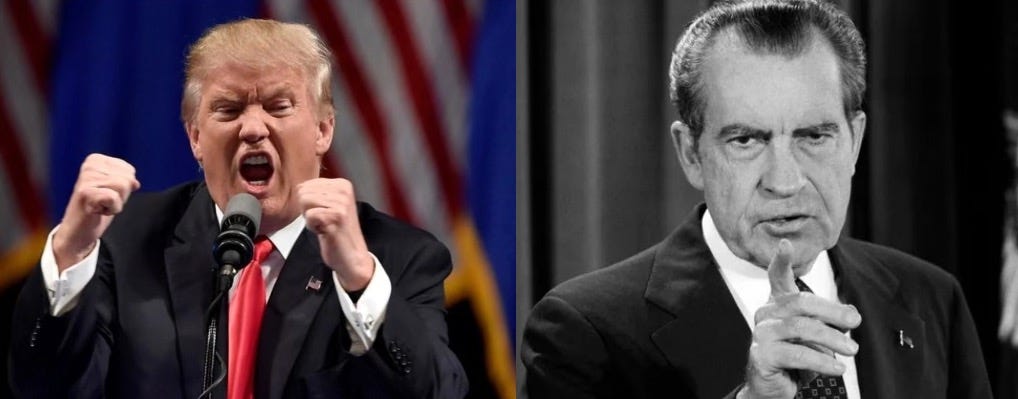
For much of the past year, the defining feature of the Trump administration has not been dominance, but containment. Courts slowed executive orders, agencies quietly narrowed enforcement, Congress hesitated but held procedural lines, and allies reassured themselves that institutions were holding. The assumption, shared even by many critics, was that while the administration was reckless, it was ultimately constrained.
That assumption no longer holds.
What has changed is not simply the number of controversies, but the nature of the evidence now emerging. In Minnesota, video documentation directly contradicted official federal statements about a fatal encounter involving federal enforcement. This was not a matter of interpretation or partisan framing. It was a factual conflict between what was said by senior officials and what could be plainly seen. When evidence becomes unavoidable, the system is forced to move out of quiet containment and into public accountability.
This shift matters because it pierces a key layer of protection that has surrounded the administration: plausible deniability. For months, damaging actions could be attributed to unnamed agents, misunderstood orders, or rogue enforcement. Minnesota disrupted that pattern by attaching decisions to identifiable officials and a traceable chain of command. Once accountability becomes personal rather than abstract, institutions behave differently.
The Department of Homeland Security illustrates this transition clearly. Until recently, DHS functioned as a shield, absorbing criticism while continuing to execute the administration’s agenda. Following recent events, it has instead become a liability. Active state-level investigations, combined with federal non-cooperation, have turned DHS into a legal and budgetary risk. Historically, this is the moment when Congress intervenes, not out of moral outrage, but out of institutional necessity. No legislature tolerates an agency that threatens its appropriations, credibility, and oversight authority.
Congressional behavior already reflects this shift. While impeachment language remains cautious, funding discussions have changed tone. Oversight is no longer hypothetical. The question being asked behind closed doors is no longer whether the administration’s actions are controversial, but whether continuing to defend them exposes lawmakers themselves to political and legal consequences. That is a critical distinction.
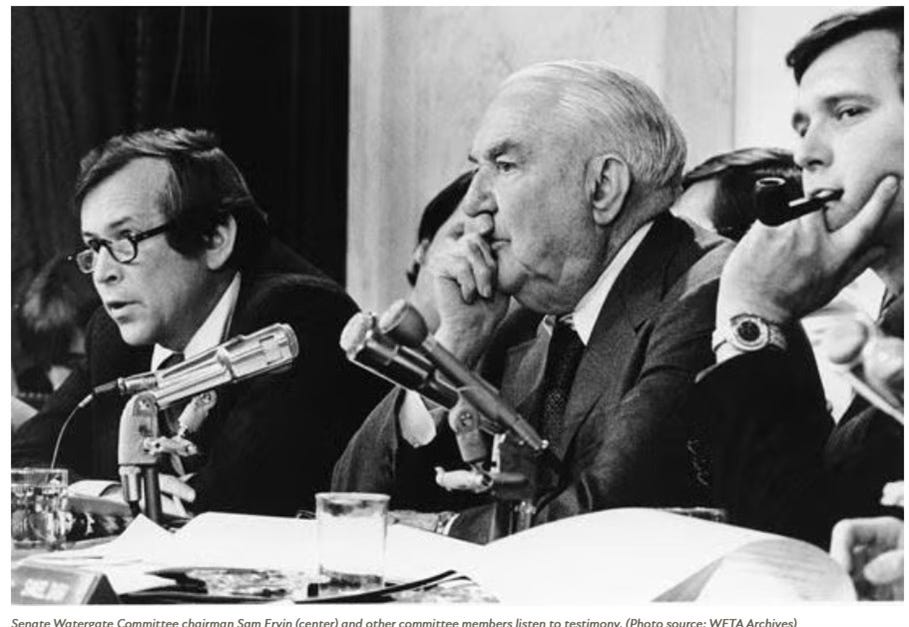
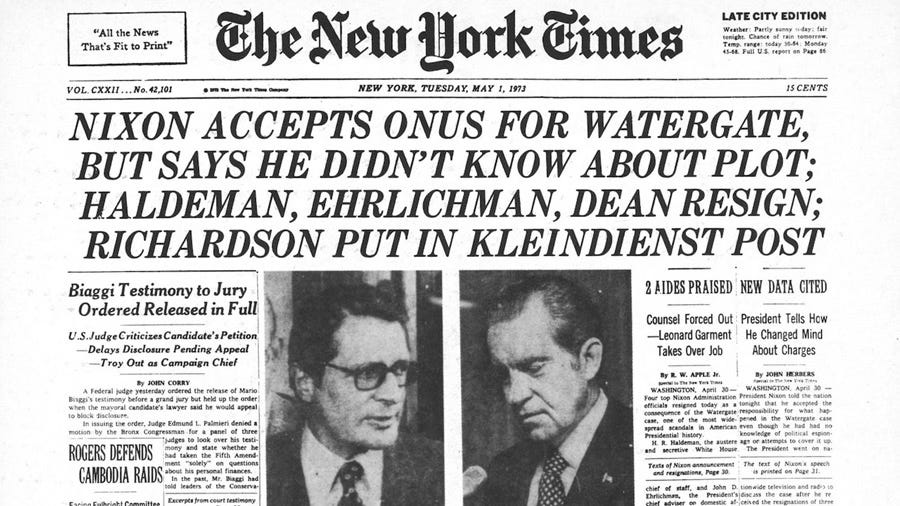
This is where the Nixon comparison becomes instructive, not as rhetoric, but as structure. Richard Nixon’s downfall did not begin with resignation calls. It began when institutions stopped absorbing damage on his behalf. The moment Barry Goldwater and other Republican leaders concluded that protecting Nixon endangered the party and the system, the end became inevitable. What mattered was not public anger alone, but elite withdrawal.
We are now approaching a similar threshold. Republican lawmakers have not yet broken publicly in large numbers, but their language is shifting. “Unfortunate” has given way to “unacceptable.” Silence is replacing defense. Distance is replacing loyalty. These are early signals, but they are consistent ones.
Importantly, this does not yet mean impeachment is certain or immediate. What it means is that the administration has lost control over outcomes. When state attorneys general initiate investigations due to federal non-cooperation, when courts assert jurisdiction without hesitation, and when media coverage converges on questions of legitimacy rather than policy disagreement, the presidency enters a phase where events dictate responses, not the other way around.
The Trump administration is no longer merely constrained. It is experiencing institutional erosion. The systems designed to protect executive authority are beginning to operate independently of presidential preference. That is not collapse yet, but it is the condition that makes collapse possible.
If history is a guide, the next phase will not be dramatic speeches or sudden resignations. It will be quieter and more procedural: funding conditions, subpoenas, testimony, and selective sacrifice within the cabinet to contain damage. Whether that containment succeeds remains uncertain. What is no longer uncertain is that the period of managed chaos has ended.
The system has started to answer back.

Well,let’s hope this is true and it happens at an accelerated speed. The administration needs to be ousted and imprisoned. Or executed.